ServicesCommercial Roofing
Commercial Roofing in Oxford
We look after the roof your building already has. Membrane seams, flashing, drains and metal panels get inspected, repaired and maintained so the roof lasts as long as it reasonably can. When replacement is the honest answer, we explain why and show you the photos.
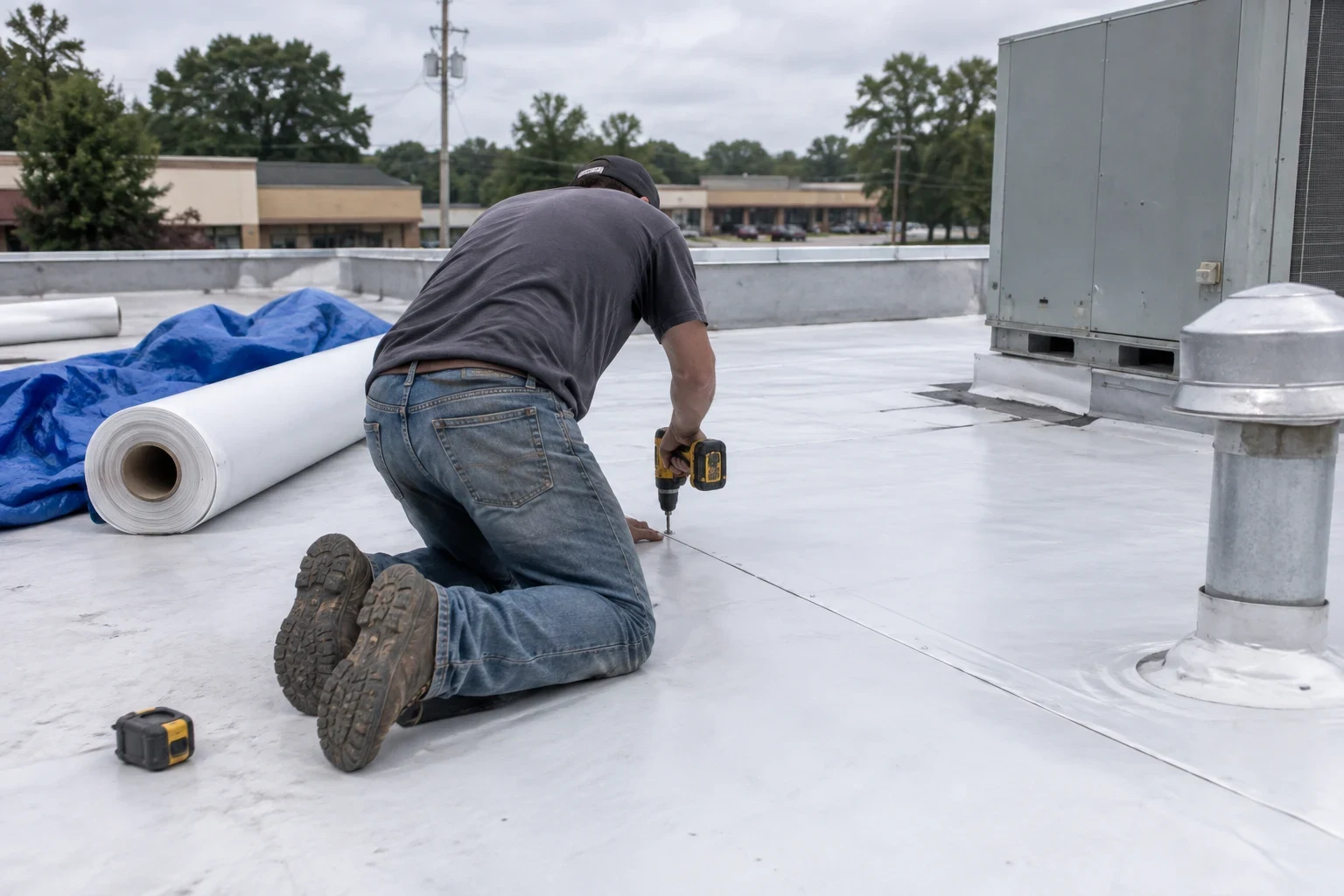
Care for the roof over your business
Most commercial roofs in and around Oxford are low-slope: TPO, EPDM, modified bitumen or standing seam metal. They rarely fail all at once. Trouble starts at a seam that has lost its bond, a pitch pocket that has dried out or a drain that holds water after every rain.
Our work centers on existing buildings. We find those weak points early, repair them with materials matched to the original system, and set up a maintenance rhythm so small faults stay small. That keeps your tenants, inventory and equipment dry, and it pushes a full re-roof further down the calendar.
Our attention stays on the roof itself, from the membrane and insulation down to the deck, the edge metal and the drains that carry water away.
Commercial roof care, piece by piece
- Seam and membrane repairs
- TPO, EPDM and modified bitumen are cleaned down to a sound surface, primed and patched with materials that match the original sheet. We run a probe along heat-welded seams by hand and reweld or strip in any section that has opened.
- Flashing at penetrations
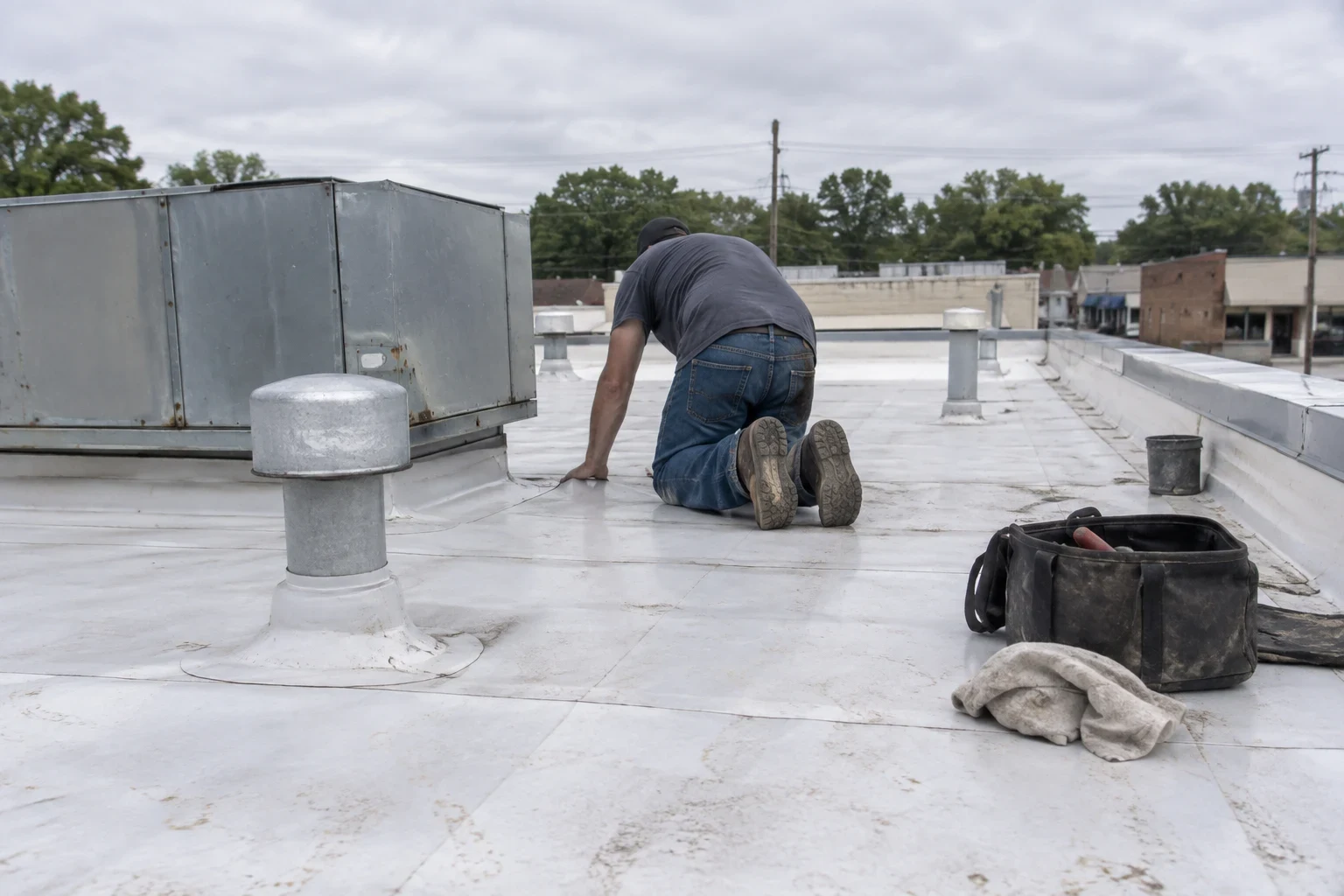
- Most leaks start where something passes through the roof: unit curbs, vent stacks, pipe boots and pitch pockets. We reseal these or rebuild them so water cannot find a way in.
- Drainage and standing water
- Drains and scuppers are cleared, strainers checked, and any spot that holds water for more than a couple of days after rain is mapped. Ongoing ponding gets a written plan to correct it.
- Metal roof maintenance
- On standing seam and screw-down panels we swap out loose or worn fasteners, reseal laps and treat surface rust while it is still shallow.
- Restoration coatings
- An aging but intact membrane can often be extended with a coating. We recommend one only after an adhesion test and a check for wet insulation below.
- Replacing a failed roof system
- When repair no longer makes sense, we remove or recover the old system and install a new one on the existing building, giving edges and transitions the same care as the field.
Signs your commercial roof needs attention
Stains on ceiling tiles
A brown ring on a drop ceiling often shows up far from the actual leak. Water travels along the deck before it drips, so the source needs tracing on the roof.
Water standing after rain
Ponding that lingers two days or more stresses seams and speeds up membrane wear. It also adds weight the structure was not designed to carry for long.
Blisters, wrinkles or open seams
These mean moisture or air has gotten under the membrane, or the adhesive has let go. Caught early, they are usually a straightforward repair.
Loose edge metal
Perimeter flashing that rattles or lifts in wind is the first place a storm can peel a roof back.
Rust around fasteners
On metal roofs, orange streaks at screw heads mean the washers have failed. Each one is a small, steady leak waiting for the next downpour.
How a commercial roof visit runs
- 1
Schedule a free inspection by phone
We set a time that suits your business hours and ask about any known leaks, past repairs and roof access.
- 2
Walk the roof and document it
We check the field, seams, flashing, drains and edges, then probe suspect areas. Everything we find is photographed.
- 3
Review the photo report together
You get a photo report of findings with each issue located and explained. We separate what needs doing now from what can wait, and we tell you plainly if repair still makes sense.
- 4
Do the work with minimal disruption
We stage materials away from entrances, keep debris off walkways and parking, and work around your operating hours where we can. The roof and grounds are cleaned before we leave.
- 5
Plan the next check
Low-slope roofs do best with a look each spring and fall. We note what to watch so the next visit starts where this one ended.
What shapes the cost of commercial roof work
We price a commercial roof from what turns up during the inspection, not from a square-foot guess. Once we have walked it, you get a written estimate broken into line items, so each repair and its share of the total is easy to follow. Any change to that scope is discussed with you first. Financing available through Acorn Finance if it helps to spread the cost.
- Membrane type and age
- A flexible TPO sheet with a few failed welds is a quick fix compared with modified bitumen that has gone brittle and cracked. The system and its condition decide the method and the materials.
- Moisture below the surface
- Insulation that has soaked up water must be removed and replaced before a patch or coating will bond. It is the most common hidden expense on low-slope roofs, so we probe and test before we put numbers on paper.
- Rooftop equipment and penetrations
- HVAC curbs, exhaust fans, vents and pipes each need their own flashing. A roof crowded with equipment takes more hours than a clear, open field.
- Access and timing
- Building height, whether we need a lift, and scheduling around your open hours all shape labor.
Commercial roofing questions
Something not covered here? (919) 237-9586
Can my flat roof be repaired, or does it need replacing?
Often it can be repaired. If the membrane still flexes and the insulation under it is dry, targeted repairs or a coating can add real years of service. We show you the photos and moisture readings, so the decision rests on what the roof shows rather than on a sales pitch.
How often should a commercial roof be inspected?
Twice a year, once in spring and once in fall, is a sound routine, plus an extra look after any severe storm. Those regular checks catch clogged drains and loose edge metal before water gets inside the building.
Will the work interrupt my business?
Most maintenance and repair happens up on the roof. We plan deliveries and noisier tasks around your hours where we can, and doorways and walkways stay clear the whole time.
Can you work with my insurance company after a storm?
We can. Our crew will meet the adjuster on your roof and stay involved from the first photos through the end of the claim. Every damaged area is documented with dated pictures before anything is touched. The insurer makes the coverage decision, so our job is to make sure the adjuster sees the roof as it really is, and our storm damage repair page covers this in more detail.
What types of commercial roofs do you work on?
We maintain and repair TPO, EPDM, modified bitumen and metal roofs on existing shops, offices and small warehouses. When a roof is past saving, we can replace the roofing system on that same building.
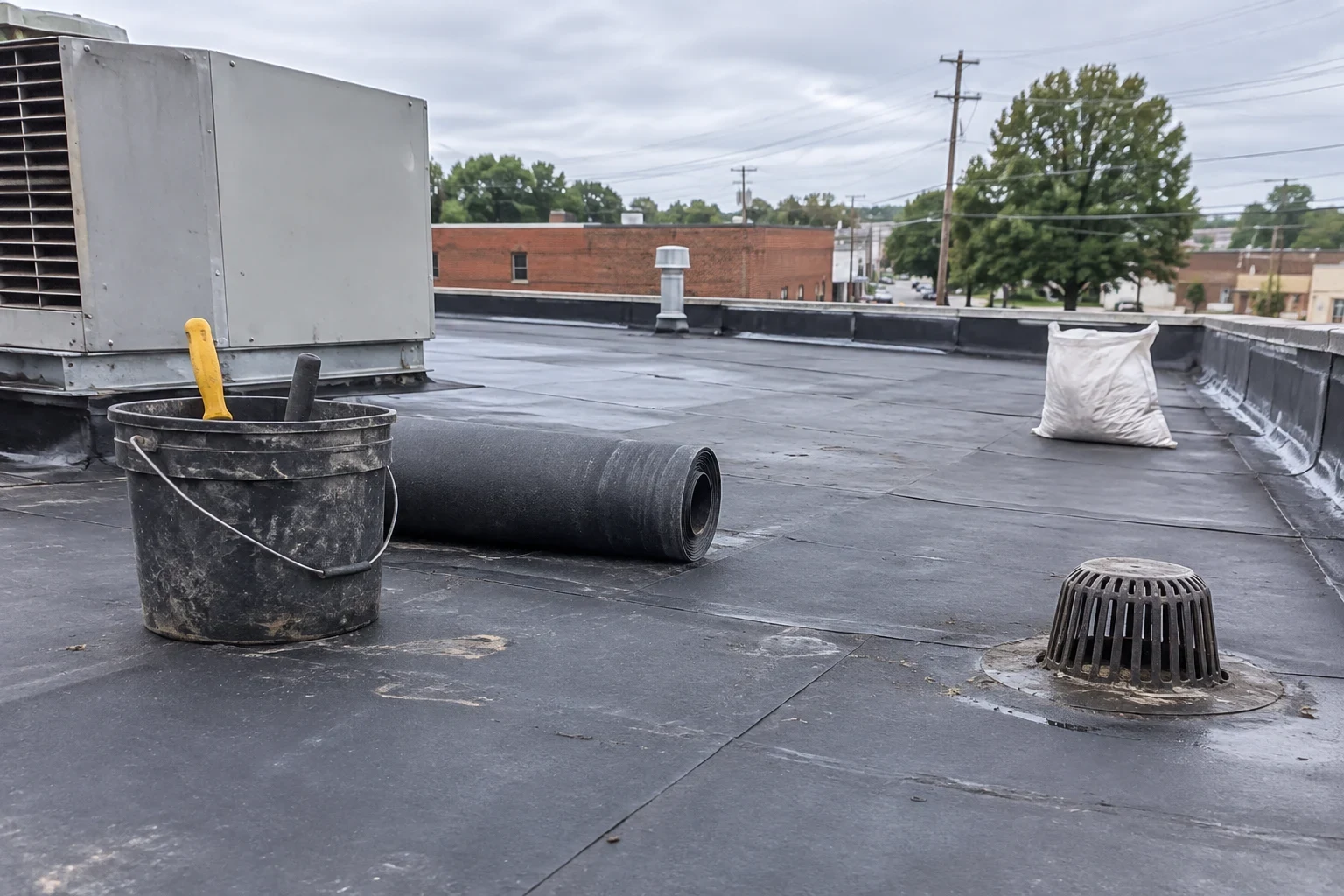
See your commercial roof up close
We will walk every section, photograph the seams, drains and flashing, and talk you through what we saw without pressure. The inspection is free, and the next step is yours to choose.